



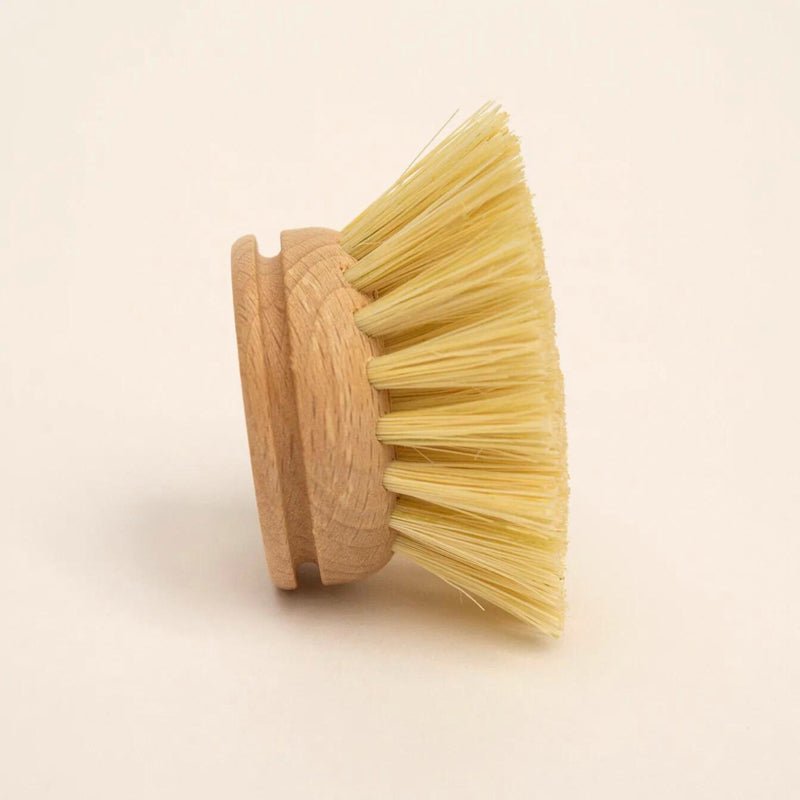
Clean a wooden embossed rolling pin dry: brush the flour and dough out of the engraved grooves with a stiff dry brush, then wipe the surface with a barely damp cloth and dry it immediately. Never soak it, never put it in the dishwasher, and never leave it wet. Wood absorbs water, swells, and then cracks along the grain as it dries.
An untreated hardwood pin will last for years on this routine. The two things that shorten its life are water and heat, and both are avoidable.
After every use
- Let it dry for a few minutes. Dough that is still soft smears into the grooves. Dough that has dried for five minutes brushes out as crumbs.
- Brush along the grooves. Use a dry brush with firm bristles and work in the direction of the engraving, not across it. A bamboo cleaning brush or a clean, dry toothbrush both work.
- Tap it out. Hold the pin over the bin and knock the handle against your palm to shake loose crumbs free.
- Wipe if needed. Only if something greasy or coloured is on the surface: a barely damp cloth, once over, then dry the pin straight away with a tea towel.
- Store it dry and flat, away from the hob, the radiator and the sink.
What not to do
- Do not put it in the dishwasher. Hot water plus steam plus detergent is the fastest way to split a wooden pin. This is not a warranty technicality; it will visibly crack.
- Do not soak it or run it under the tap. Water gets into the end grain, the wood swells, and it cracks as it dries out again.
- Do not use washing-up liquid on the engraving. Detergent works its way into the grain and stays there. Dry brushing removes flour perfectly well without it.
- Do not scrape the grooves with anything metal. A knife tip or a metal skewer takes the crisp edge off the engraving, which is exactly the part doing the work.
- Do not dry it in the oven or on a radiator. Fast drying is what causes splitting. Air-dry at room temperature.
- Do not store it in a sealed bag while it is still even slightly damp.
When something is genuinely stuck
Dried dough that will not brush out: leave the pin somewhere dry for an hour so the residue hardens completely, then brush again. Hard, brittle dough breaks away; soft dough smears. Patience does more here than water.
Food colouring on the wood: untreated wood takes up colour, and a strong gel colouring may leave a faint tint permanently. It is cosmetic and does not affect the pattern. If you use coloured dough regularly, keep one pin for it.
A greasy feel after working with a very buttery dough: wipe with a cloth wrung out in warm water, dry immediately, and leave it out overnight before storing.
Longer-term care
An untreated beech pin does not need oiling to work, and it should never be varnished - a coating fills the bottom of the engraving and takes depth out of the pattern.
If the wood looks very dry after a lot of use, a light wipe of food-grade mineral oil on the handles and the plain sections is fine. Keep it out of the engraved area, wipe off any excess, and leave it to absorb overnight. Do not use olive oil, sunflower oil or any culinary oil that can go rancid on the wood.
Questions
Can I wash an embossed rolling pin with water?
Only a wipe with a barely damp cloth, dried immediately. Never submerge it, never hold it under a running tap, and never leave it sitting wet.
Is a wooden rolling pin dishwasher safe?
No. Not this one and not any untreated wooden kitchen tool. The combination of hot water, steam and detergent swells and then cracks the wood.
How do I get flour out of the engraving?
A dry brush with firm bristles, worked along the grooves. Let any dough residue dry and harden first so it breaks away instead of smearing.
Is it hygienic to clean a rolling pin without soap?
For dry flour and butter dough on untreated hardwood, yes. Wood does not hold moisture the way a plastic surface does, and there is nothing wet left behind for anything to grow in. Keep it dry and store it in the open air rather than sealed in a bag.
Do I need to oil it?
No. It works untreated. A light wipe of food-grade mineral oil on the handles is optional if the wood looks parched, but keep it out of the engraved section.
My pin has a small crack - is it still usable?
If it is a fine surface line in the grain and the engraving is intact, it will still print. If it runs through the pattern or the pin flexes, stop using it. If it happened within the guarantee period, contact us at contact@pastrymade.com.
Related guides
What an embossed rolling pin is · How to use one · The right dough · How to choose one
Leave a comment
Tried this at home? Tell us how your cookies turned out.