



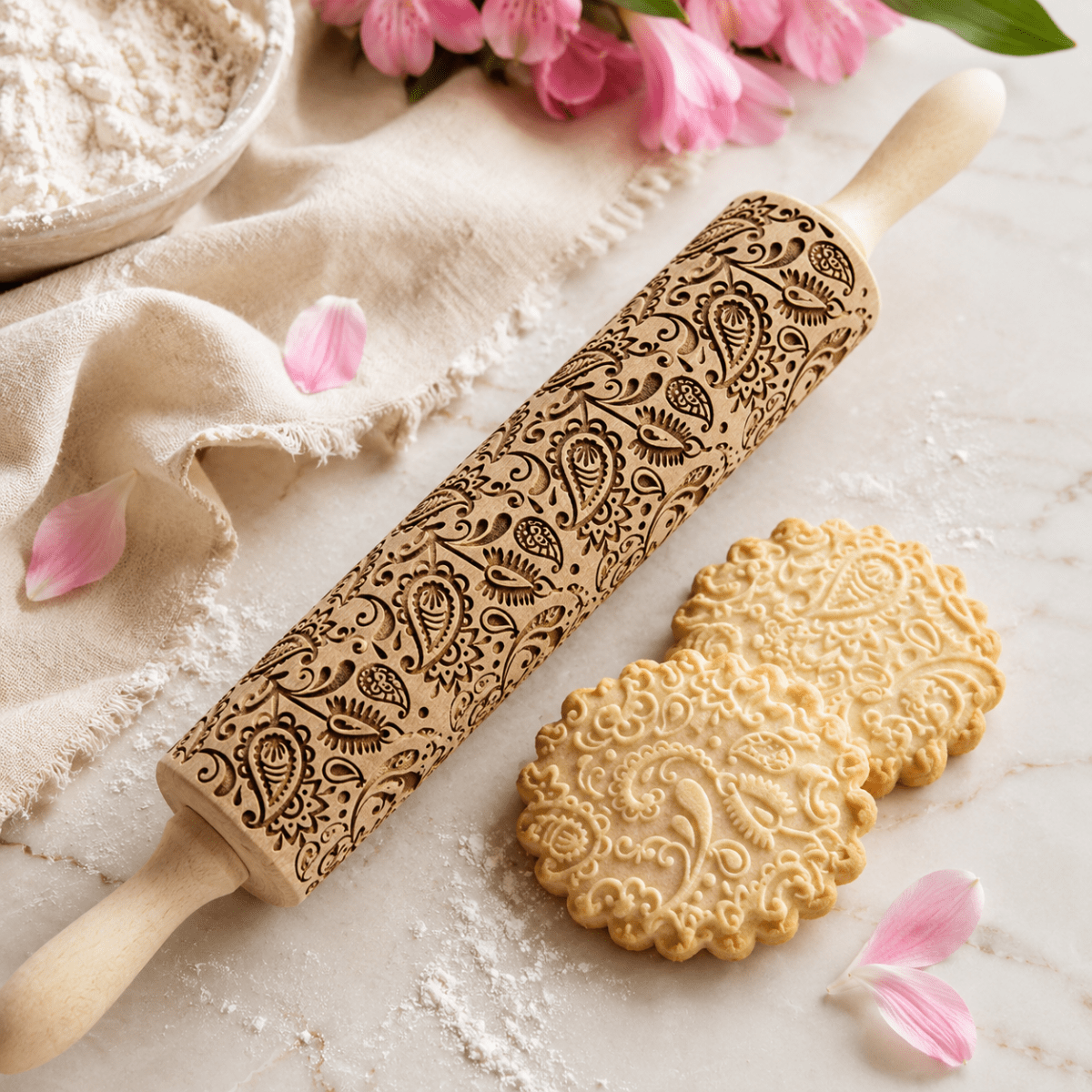
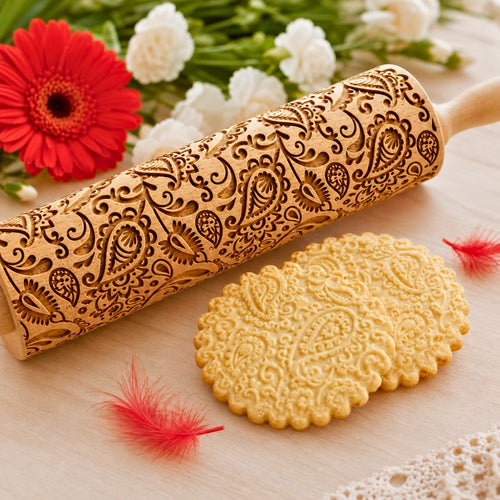
The best dough for an embossed rolling pin is a shortbread: flour, butter and sugar, with no baking powder and no baking soda. It does not rise and barely spreads, so the pattern you press into it is still there when it comes out of the oven. A plain sugar cookie dough made without a raising agent is the next best choice.
Nearly every complaint about embossed cookies - faint pattern, blurred pattern, pattern gone entirely - is a dough problem rather than a tool problem. This guide explains why, and gives a recipe that works.
Why most cookie doughs erase the pattern
A pressed design is a shape held in soft dough. Three things in a recipe destroy it in the oven.
Raising agents
Baking powder and baking soda release gas as the cookie heats. The cookie puffs up from the inside, the surface stretches, and the relief flattens out. This is the single most common cause. A recipe that calls for either one cannot be used for embossing unless you leave it out.
Too much sugar for the amount of fat
Sugar melts and turns liquid before the dough sets. A sugar-heavy dough flows outwards while it bakes, and the pattern flows with it. Shortbread ratios - roughly twice as much flour as butter, and much less sugar than either - keep the dough thick enough to hold still.
Warm dough
Butter that is already soft when the tray goes in the oven starts spreading immediately, before the flour and egg have set into a structure. Cold butter buys the cookie the extra minute it needs to firm up in the shape you gave it. This is why chilling the cut shapes matters as much as the recipe does.
Doughs ranked for embossing
| Dough | Holds a pattern | Notes |
|---|---|---|
| Shortbread | Excellent | The default. No leavening, low sugar, high butter. |
| Sugar cookie, no raising agent | Very good | Sweeter and paler than shortbread; check the recipe has no baking powder. |
| Springerle | Excellent | The traditional European embossing dough. Left to dry overnight before baking so the design sets hard. |
| Gingerbread / speculaas | Good | Works if you omit the raising agent. The dark colour shows relief well. |
| Fondant and sugar paste | Excellent | Not baked at all, so nothing can spread. Takes the crispest impression of anything. |
| Shortcrust pastry | Good | For embossed pie lids and tart tops. |
| Chocolate chip cookie dough | Poor | Built to spread. The pattern is gone in the first two minutes. |
| Anything with yeast | Unusable | Rises far too much. |
A shortbread that holds a print
This makes roughly 25-30 cookies at 6 mm thick.
Ingredients
- 250 g cold unsalted butter, cut into cubes
- 125 g caster or icing sugar
- 375 g plain flour
- A pinch of salt
- Optional: the seeds of a vanilla pod, or the zest of a lemon
No egg, no baking powder, no liquid. The absence of all three is the point.
Method
- Rub or beat the cold butter into the sugar until just combined. Do not cream it until pale and fluffy - that beats air in, and air makes the cookie rise.
- Add the flour and salt and work it only until the dough comes together. Overworking develops gluten, and a stretchy dough springs back out of the pattern.
- Flatten into a disc, wrap, and chill for at least an hour. Overnight is better.
- Roll to an even 5-7 mm on a lightly floured surface, with rolling guides if you have them.
- Dust the engraved pin with flour, tap off the excess, and roll it once across the sheet with firm pressure. One pass only.
- Cut your shapes, lift them onto a lined tray, and freeze for 15-30 minutes.
- Bake at 160 °C / 320 °F for 12-16 minutes, until the edges are barely golden. The tops should stay pale.
- Leave them on the tray for five minutes before moving them - shortbread is fragile while hot.
Variations that still hold the pattern
- Chocolate: replace 40 g of the flour with cocoa powder. The dark surface makes the relief read more clearly.
- Spiced: a teaspoon of cinnamon, cardamom or mixed spice with the flour.
- Citrus: zest with the sugar, no juice - added liquid softens the dough and blurs the print.
- Gluten-free: a plain 1-to-1 gluten-free flour blend works well here, and often holds a pattern slightly better than wheat flour because there is no gluten to spring back.
Questions
Can I use ready-made refrigerated cookie dough?
Usually not. Supermarket cookie dough is formulated to spread and almost always contains a raising agent. If you want to try it, chill it hard and expect a soft result.
Do I have to chill the cut cookies as well as the dough?
Yes, and it makes a visible difference. Fifteen minutes in the freezer between cutting and baking is the cheapest improvement available to you.
What thickness should I roll to?
5 to 7 mm. Thinner and the engraving reaches the worktop before the pattern is fully pressed; thicker and the cookie bakes unevenly under the raised design.
Why are my cookies puffing up in the middle?
Either a raising agent in the recipe, or too much air beaten into the butter at the start. Mix the butter and sugar just until combined rather than creaming them pale.
Can I re-roll the offcuts?
Yes. Gather them, chill them again until firm, and roll them out fresh. Shortbread tolerates re-rolling far better than a dough that depends on leavening.
Related guides
How to use an embossed rolling pin · What an embossed rolling pin is · How to choose one
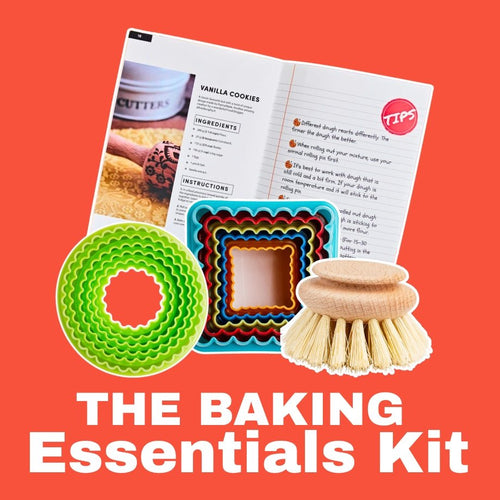
Tools: embossed rolling pins · cookie cutters and baking tools · our printed recipe booklet
Leave a comment
Tried this at home? Tell us how your cookies turned out.